I have read nine of the fifty books on the New York Times' newly published list of the best thrillers of the 21st century. Nine.
I am not ashamed of this. I am an editor, not a reading machine. I spend my days dissecting manuscripts and helping authors land their twists, not ticking off lists compiled by 291 people who almost certainly have more shelf space than I do. Of course, I love to read around my genre, but I was actually more stunned that I hadn't read more – and I read a lot.
But here is the thing about lists, especially "Top X". They can feel prescriptive, when the glorious thing about reading is that it is subjective. I would not agree with every entry on the NYT list. You probably would not agree with all of mine should I create such a list. That is exactly what makes talking about books so much fun.
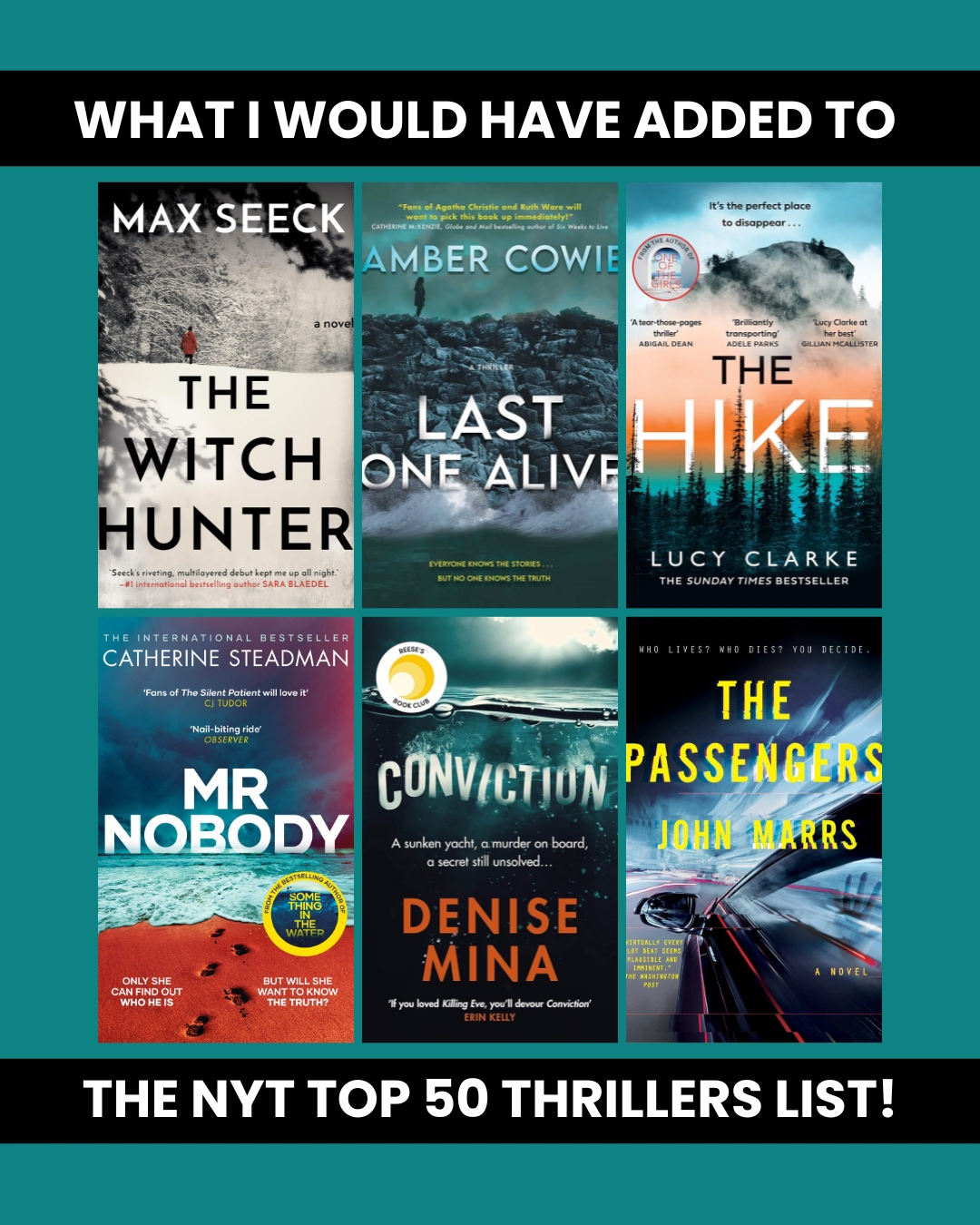
So, in the spirit of friendly disagreement, here are eight thrillers I would have slipped in somewhere. Not because they are objectively better than anything on the list, but because they do something I think deserves recognition.
1. The Witch Hunter by Max Seeck
Finnish crime that brings a genuinely fresh energy to Scandi noir. It is not just dark and atmospheric – it is structurally clever in ways that make you realise how formulaic some of the genre can be. If you are tired of the usual Scandinavian suspects, this is your next read.
2. The HIke by Lucy Clarke
Lucy Clarke understands isolation better than almost anyone writing thrillers today. Whether it is the wilderness or a close-knit community, she knows that the real danger is not what is outside – it is what people are capable of when they think nobody is watching.
3. Last One Alive by Amber Cowie
Pure, unrelenting suspense. This is the kind of book that makes you realise how hard it is to sustain tension without relying on gimmicks. Cowie does it with character and pace and dramatic setting, and frankly, it is a masterclass in making the reader forget to breathe.
4. Mr Nobody by Catherine Steadman
An amnesia thriller that actually earns its premise. Steadman plays with identity and memory in a way that feels psychologically grounded rather than conveniently plot-driven. I have made clients study this for how to keep a reader guessing without cheating.
5. The Hit List by Holly Seddon
What a hook! Dark, propulsive, and utterly unwilling to let you go. Seddon has a gift for momentum - every chapter ends with a question you need answered, and yet nothing feels cheap. It is the kind of pacing I wish more manuscripts could nail.
6. The Passengers by John Marrs
High-concept near-future thriller that could have been all premise and no heart. Instead, Marrs makes you care desperately about people trapped in a situation that is terrifying because it feels about five minutes from actually happening. A brilliant example of grounding speculative fiction in real human stakes.
7. The Hiking Trip by Jenny Blackhurst
I am going to say very little about this one because the less you know, the better. But the twist is genuinely exceptional – not because it is shocking, but because the author does such a great job of positioning the reader that the impact of the twist is just mindblowingn. Blackhurst lays every clue with the patience of a card sharp, and the reveal is deeply satisfying.
8. Conviction by Denise Mina
Scottish crime fiction at its absolute finest. Her characters live and breathe in a way that makes you forget you are reading genre fiction at all. If you want to see how crime novels can carry genuine weight, start here.
So there you have it. Eight books, eight entirely subjective opinions, and perhaps eight your totally disagree with.
Good. That is the point.
I would genuinely love to know what you would have added. Tell me in the comments, and I will add the most persuasive suggestions to my own TBR. With so many choices out there, personal recommendations are the backbone of the publishing industry, but it's also every reader's perogative to decide that THE book of the summer, is totally not for them too.