Should I publish my book in British or American English?
Writing Advice
Originally posted: January 15, 2021 (updated December 2025)
2025 editor’s note
This post was originally written in 2021, but it’s a question I still get asked regularly – perhaps even more so now that the publishing landscape (and my own client base) is increasingly international. I’ve lightly updated it to reflect Canadian and Australian English alongside British and American English, but the core advice remains the same.
***
One of my first jobs of 2021 was a little different from my usual fare, but it was one that really got me thinking. Not only because it was a speculative novel that transported the reader to a not-so-distant future and questioned the role of AI – and what it means to be human – but also because I was tasked with translating the novel from English into… English.
You may well be scratching your head, so to clarify: I was translating the text from American English to British English.
Why do that, you ask? They’re the same language, right?
Well… yes. But also no.
And depending on your aims when you’re publishing your manuscript, which version of English you choose can be very important.
In fact, it's one of the most frequent questions I get from authors.
TL;DR – Which English should I publish in?
There’s no single “right” version of English – British, American, Canadian, and Australian English are all valid.
For fiction, story and voice matter far more than spelling conventions.
For non-fiction, localisation (laws, terminology, examples) may be crucial.
Write in the English you’re most fluent and confident in – forcing another variety can damage voice and momentum.
If authenticity or market targeting matters, translation between English variants is an option, but it affects budget and timelines.
If your goal is the widest possible reach, US English has practical advantages – but consistency matters more than perfection.
Should I publish in US or UK English?
(And that’s not even touching on all the other variants of English – Canadian, Australian, Indian, South African, Irish…)
The short answer is: it’s up to you.
At which point, the author groans. (I know – incredibly helpful.)
But genuinely, there is no single right answer, because it depends on a few key variables.
For example:
Are you publishing fiction or non-fiction?
What market are you aiming for?
Where are you based, and which English do you naturally write in?
What are your budget and timeline?
Fiction vs non-fiction
If you’re publishing fiction, which 'English' you write in doesn’t matter most of the time – because what matters is the story. Readers all over the world pick up novels to escape and be entertained, and as long as your writing and plot are doing their job, spelling conventions are usually a secondary concern.
Non-fiction, however, is a different beast.
Depending on the subject matter, you may need to think much more carefully about localisation. A book about budgeting, healthcare, or tax systems written with US laws and terminology in mind may not translate particularly well for British, Canadian, or Australian readers. In those cases, authors sometimes choose to create separate editions, add region-specific chapters, or substantially adapt examples and references.
(That said, once you start extrapolating this to every English-speaking country, it quickly becomes an ambitious – and expensive – project. Which brings us neatly to budget.)
So when it comes to language choice, content is key.
Target market matters
This leads us to one of the biggest considerations: your target readership.
You want your book to hit the right notes for the audience you’re writing for – and ideally not give them a reason to put the book down (or leave the dreaded scathing Amazon review).
A saga set in 1940s Liverpool is probably going to feel a bit odd written in American English if it’s aimed at a traditional UK saga readership. Equally, a romance set on a cattle station in the Australian Outback may feel slightly off if written in British English. (Did you know Australians often call kettles jugs?)
That said, we’re now firmly in a global marketplace. Thanks to the internet, anyone can read almost any book, anywhere. Authors quite understandably want their work to reach the widest possible audience.
Which brings us to what I think is the most crucial factor of all.
What English do you write in?
I can almost hear the response:
“Surely I should be writing for the biggest audience?”
Not necessarily.
If your novel is set in a coffee shop in Melbourne, Australian English might feel like the obvious choice. But if you naturally write in American English – or British, or Canadian – forcing yourself to write in a different variety of English can seriously slow you down. You end up second-guessing spelling, phrasing, idioms, even punctuation. (For example, even though I'm now based in Canada, this post is written in British English, because that's what comes most naturally to me!)
If writing in a different English becomes a barrier to telling your story in your own voice, my advice is simple: don’t do it.
Your writing will suffer for it. And readers would far rather read a fantastic story written confidently in one version of English than a weaker one written in the 'most appropriate' English.
But what if authenticity really matters?
So what if you desperately want your Britain-set novel, full of British characters, written in British English – but you naturally write in American English (or vice versa)?
This is where budget and timescale come into play.
It is absolutely possible to have a manuscript translated from one form of English into another. This can add a great deal of authenticity and help you target a specific market more effectively. However, it does cost money, and it extends your production schedule – because the editor or translator needs to work on a finished manuscript.
If you have the time and resources, it’s a very useful option to consider as part of your wider publishing strategy.
So… which English should you use?
I know you’ve been patient, but I can hear the clamouring:
“So Rebecca – which English should I write my book in?”
Here’s my honest advice: write in the English you know best.
I’m British, so I find it much easier to write in British English, using British spelling, grammar, and idiom. That’s always my starting point. If I were setting a novel in New York, I could still write in British English style – but I’d need to be very mindful of my characters’ voices. American characters will talk about the subway, not the Underground.
The same applies to Canadian or Australian settings. Canadian English, for example, often blends somewhere between British and American conventions, while Australian English has its own vocabulary and rhythm. What matters most is that your characters feel authentic on the page.
And if you’re still shaking your fist at the screen thinking, That still doesn’t answer the question – fine. I’ll commit.
If your primary goal is reaching the widest possible audience, I would edge towards US English.
The US accounts for a significant share of the global publishing market, and much of the world’s English-language media is filtered through American English – film, television, music, celebrity culture. As a result, many readers outside the US are accustomed to reading US English, whereas the reverse is less consistently true.
When I worked in-house, we rarely 'translated' American books for the UK market. But when US publishers bought British titles, they often Americanised them. Telling, isn’t it?
That said, it’s very much a case of horses for courses. Write what works for you – just be consistent. Nothing pulls a reader out of a story faster than hopping between spelling systems or idioms, particularly across a series.
Bonus tip:
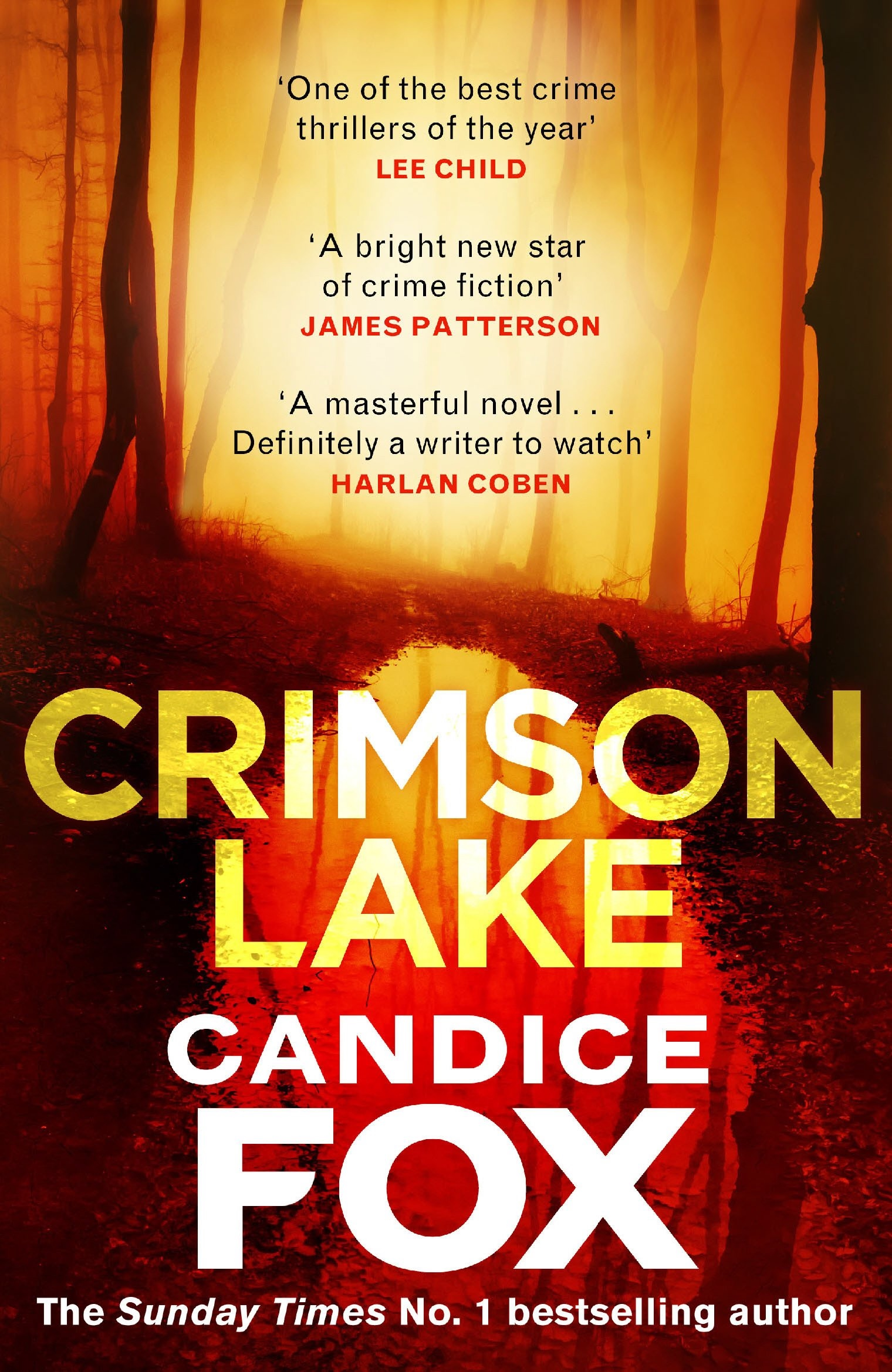
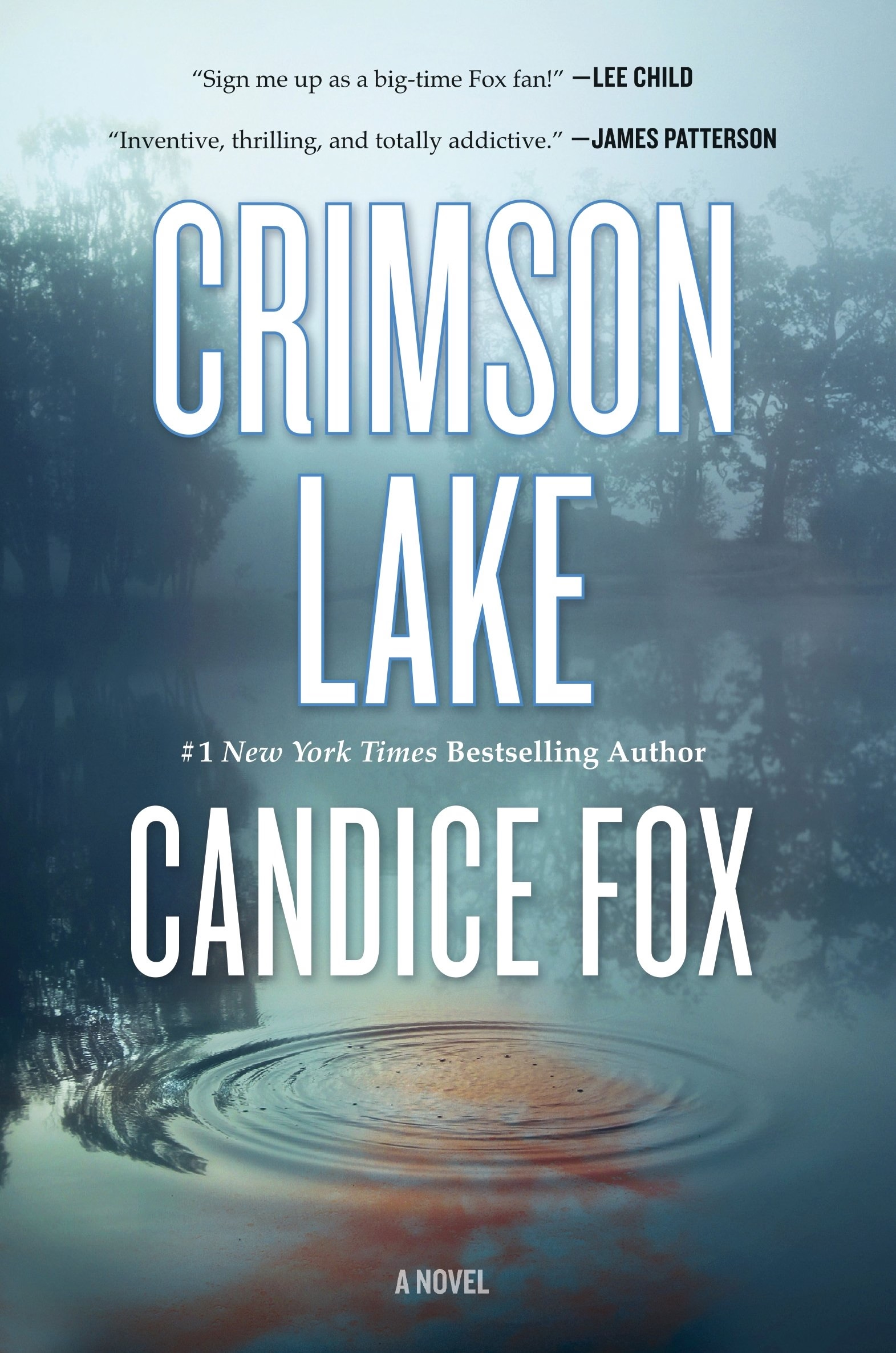
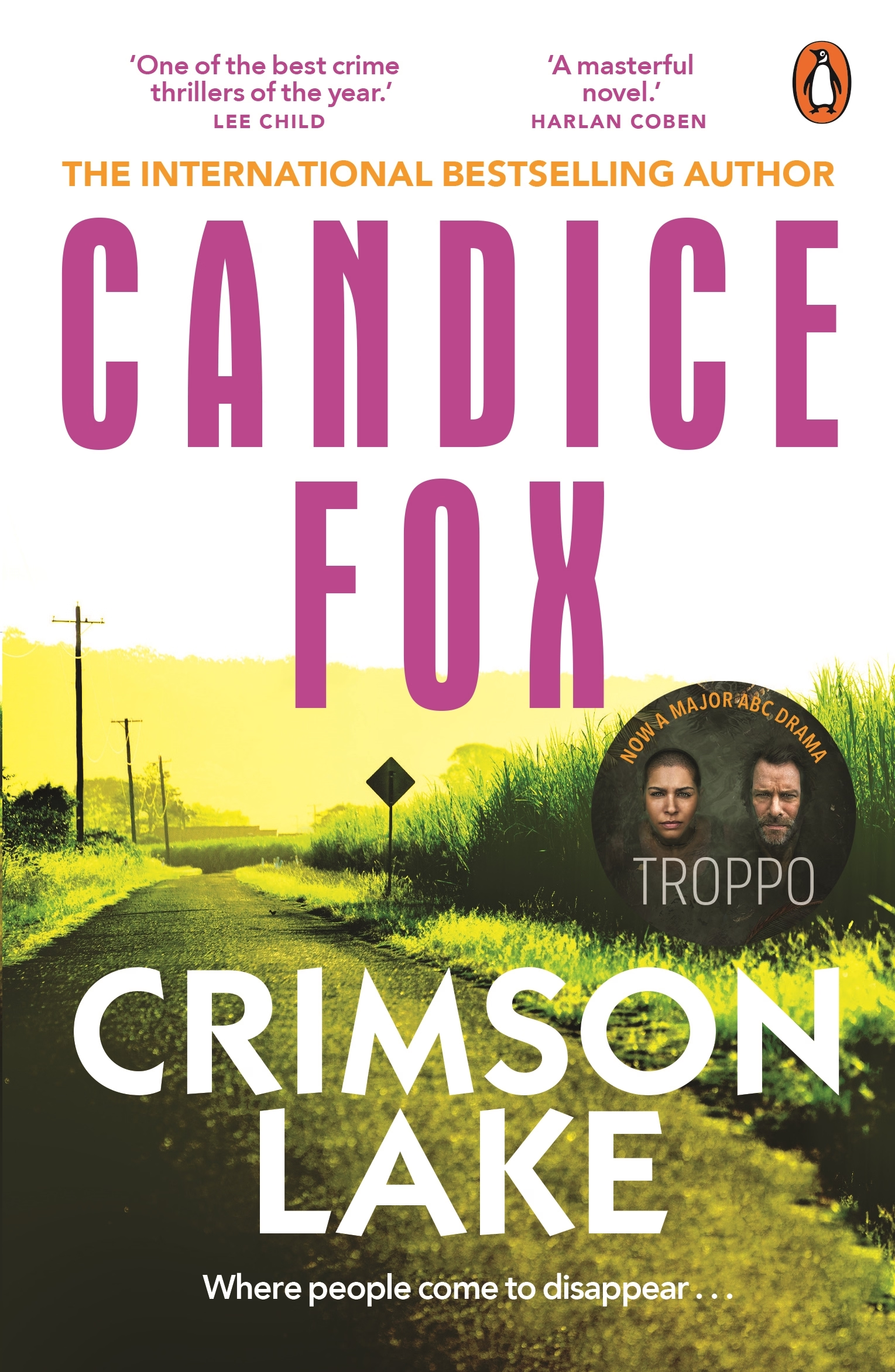
If you’re considering publishing two editions – say, UK and North American – it’s also worth thinking about cover design. Have a look at Barnes & Noble and Waterstones: you’ll often see the same book with very different covers on either side of the Atlantic.
UK Edition
US Edition
Most recent Australia/New Zealand edition (Troppo TV-Tie-in)
Are you struggling to decide what 'English' to publish your crime novel in – whether British, American, Canadian, or Australian?
I'd love to chat to you about your particular project. Either get in touch via the contact page, or book in for a quick Crime Clinic consultation to discuss what might be the right part for you.
Subscribe to my newsletter to stay up to date!
Join my cozy community of 500+ authors & publishers.